
By Fragrance Test Tube
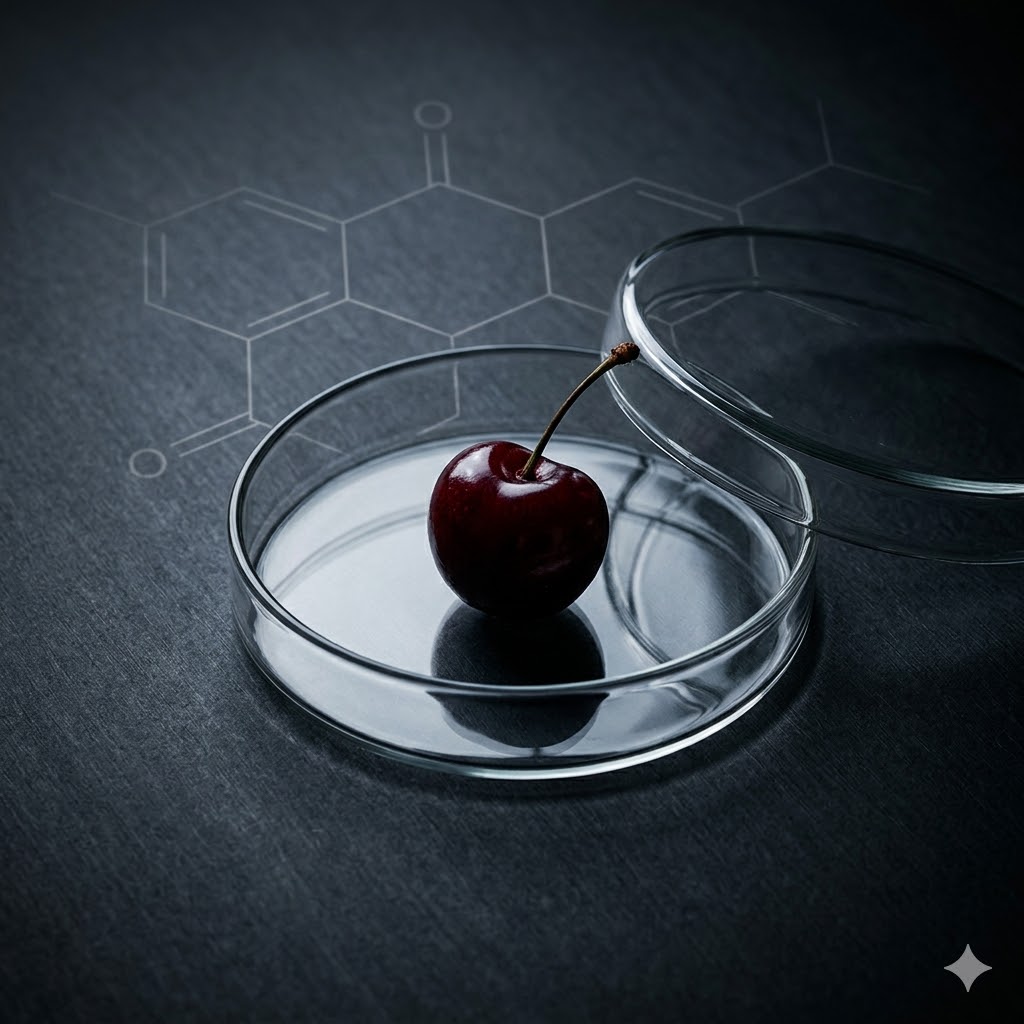
Cherry is a lie. Not a small, polite lie, but an elaborate molecular fiction built entirely from synthetic chemistry, because the real fruit is chemically inaccessible and structurally unsuited for traditional extraction anyway. That this illusion spent most of its commercial life as cough syrup and neon-lit cocktail garnish before earning a seat at the serious perfumer’s table is less a story of artistic evolution than of restraint: the discipline to abandon saccharine shortcuts, and to build something genuinely complex from the handful of molecules that make cherry smell like cherry at all.
The Extraction Paradox
Unlike citruses, whose aromatic compounds exist in cold-pressed abundance in the fruit’s rind, or blackcurrant buds, which yield a pungent concrete of extraordinary character, the cherry offers the perfumer nothing useful to extract. Steam distillation of cherry pulp produces no aromatic fraction worth discussing; the fruit’s flesh is overwhelmingly water, sugars, and pigment. Solvent extraction fares no better. The volatile compounds responsible for cherry’s aroma are present in such fragmentary concentrations, and in such chemically unstable configurations, that any extraction method aggressive enough to liberate them also destroys them.
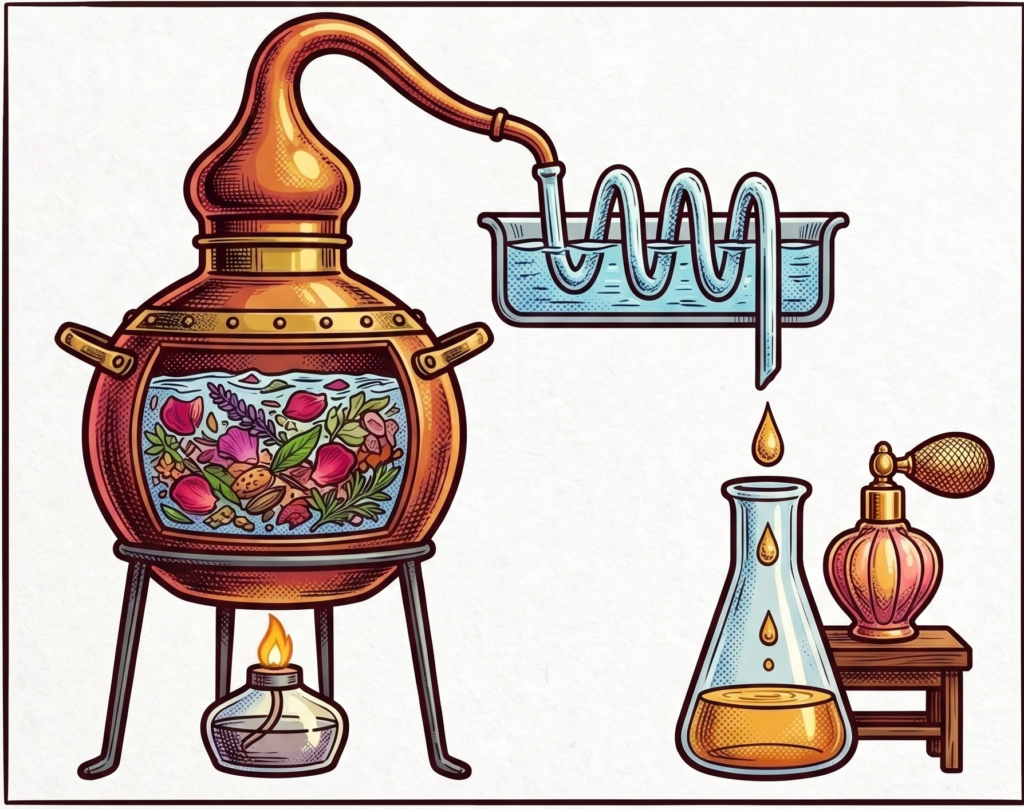
This is not a limitation of technique but of organic chemistry. The characteristic aroma of Prunus fruits does not arise from stable molecules sitting passively in the fruit’s flesh, waiting to be collected. It is generated enzymatically: triggered when the fruit’s tissue, particularly the kernel and pit, is physically disrupted. Crush a cherry pit and you release benzaldehyde; leave the fruit intact and the olfactive event barely occurs.
Every cherry note in every perfume ever made is therefore a fabrication: a synthetic argument about what cherry should smell like, built from molecules that were never inside a cherry to begin with.
The historical failure of cheap cherry was a failure of imagination in exactly this context. Faced with an extraction impossibility, the fragrance and flavour industries defaulted to the most obvious molecule available, deployed it at concentrations calibrated to register immediately and completely, and sold the result as cherry. The outcome was pharmacy-grade: maraschino syrup, children’s liquid paracetamol, drugstore lip gloss; it was a carousel of associations nobody in fine perfumery wanted to inherit. The elevation of cherry into serious composition required understanding not just which molecule smells cherry-adjacent, but precisely why it does, and how far from its raw state you need to pull it before it becomes art rather than cough medicine.
The Molecular Scaffolding
The foundation is benzaldehyde: the simplest aromatic aldehyde, produced synthetically at scale, and the compound primarily responsible for the bitter-almond-cherry character across the entire Prunus family. Steffen Arctander, whose nose operated as a precision instrument, described it as having a “powerful sweet odour, reminiscent of freshly crushed bitter almonds.” That description is accurate and useful precisely because it acknowledges what benzaldehyde actually is: bitter almond first, cherry second. It carries a faint, slightly dangerous edge; something between marzipan and a medicine cabinet, and that quality is simultaneously its greatest liability and its most compelling asset.
Raw benzaldehyde at working perfumery concentrations is an unstable, domineering top note. It evaporates early, oxidises readily, and in isolation reads as marzipan paste rather than fresh fruit. The perfumer’s task is to stabilise and redirect it using a series of modifiers, each addressing a specific structural deficiency.
Anisic aldehyde and heliotropin perform the first corrective operation: introducing powdery floral texture. Anisic aldehyde contributes a sweet, slightly floral warmth that softens benzaldehyde’s sharp tonicity while extending the cherry impression into the heart. Heliotropin, with its warm, creamy, vanilla-adjacent sweetness, adds the “cherry-pit” effect that makes an accord feel three-dimensional rather than flat and confectionary.
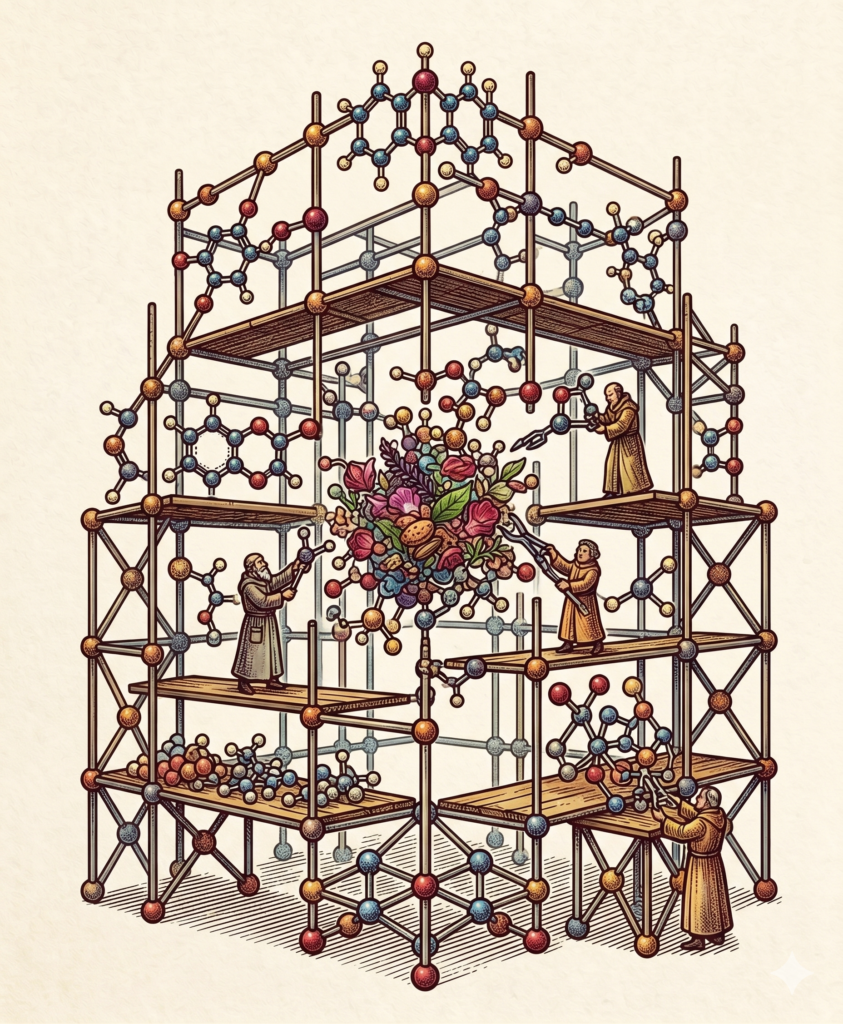
Together, these two materials provide the structural middle: without them, benzaldehyde evaporates and leaves nothing behind.
Alpha- and beta-damascenones address the jammy, wine-like fruit-pulp dimension that separates a credible cherry accord from a confectionary one. Beta-damascenone, whose olfactory profile spans rose, plum, blackcurrant, and tobacco with a honey facet operating at almost homeopathic concentrations, introduces the fermented, slightly overripe quality of real cherry flesh: the smell of fruit at its peak, one day before the wasps find it. Research on damascenone’s role in wine aroma suggests the molecule amplifies fruitiness systemically rather than simply adding its own character on top. In a cherry accord, this property is invaluable. Alpha-damascone adds warm, fruity, slightly woody qualities that prevent the accord from collapsing into pure sweetness. These molecules demand exact dosing; a heavy hand produces roasted plum jam, not cherry.
Coumarin performs a structural anchoring function that is less glamorous but no less essential. Its warm, sweet, hay-like character pins the volatile top notes to the base, creating a fixative platform that binds the composition’s middle architecture and ensures the cherry character persists through a coherent, warm drydown. Without it, a cherry accord evaporates from the top down, leaving only sweetness and a vague sense of something that was interesting before it disappeared.
This is the molecular skeleton. Everything else is a matter of which sub-facet of cherry the perfumer chooses to emphasize, and how far they are willing to push the composition away from the recognizable.
The Four Sub-Facets
I. The Cyanidic Pit
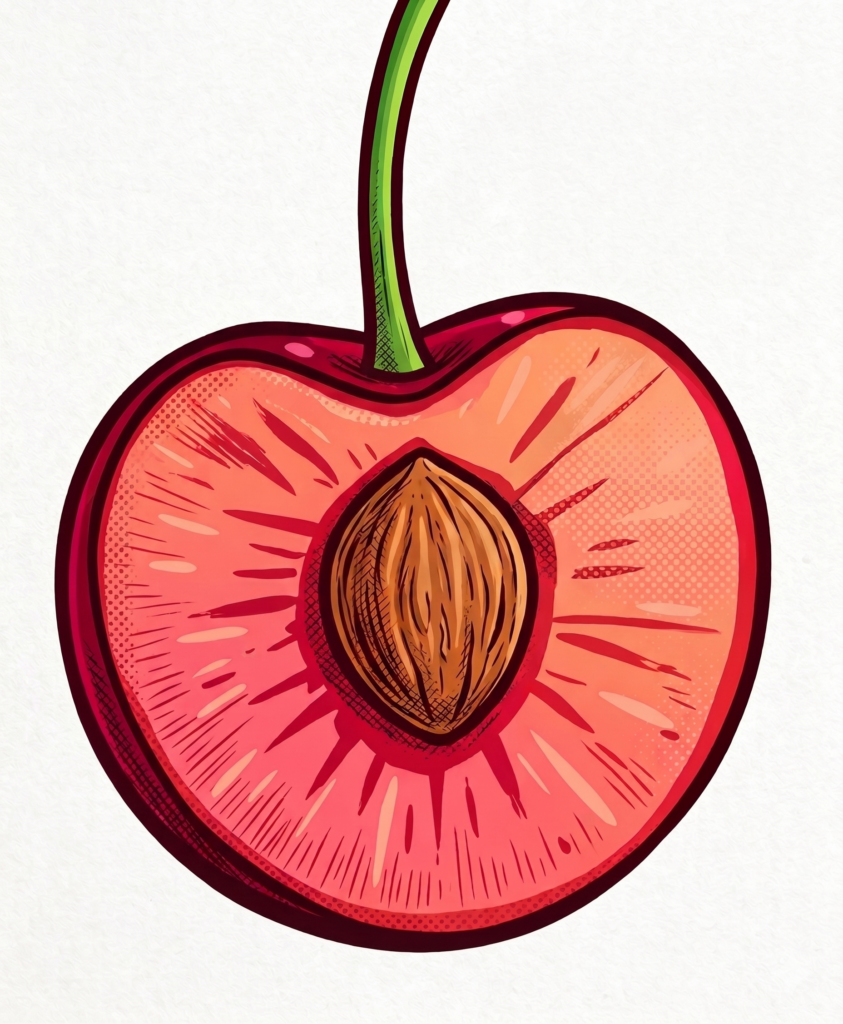
This is cherry at its most structurally honest, and conversely, its most difficult. The bitter almond facet, driven by benzaldehyde given room to breathe, is the note’s bedrock, and the reason most commercial perfumers spend careers burying it under sweetness is that it is genuinely unnerving at the concentrations required to hear it clearly. Benzaldehyde’s natural origin is from the same molecular family that produces trace hydrogen cyanide when cherry kernels are crushed. The olfactory imagination cannot entirely ignore this when the molecule is presented raw and prominent.
The Cyanidic Pit facet is realized by allowing benzaldehyde to function at the front of a composition with minimal sweetening intervention: little heliotropin, restrained use of the sweeter modifiers, perhaps a trace of salicylaldehyde to introduce a balsamic, slightly medicinal edge. The effect is a cherry that smells of the kernel more than the flesh, of the stone more than the fruit, of the moment just after you’ve cracked a cherry pit between your teeth and released something cool and alarming. This is not a crowd-pleasing facet. It is, however, the most intellectually interesting starting point for a cherry composition that intends to say something.
II. The Acidic Morello
The griotte, the sour cherry, the Morello: this is the sub-facet that demands the most from a perfumer and rewards them proportionally. Its character is tart, slightly fermented, darkly fruity, difficult to separate from a suggestion of red wine or kirsch: Morello cherries macerated in spirit. Building it convincingly requires a different toolkit than the maraschino-sweetness approach.
The structural strategy involves three material classes working in counterpoint. Green esters provide the sharp, slightly underripe, fruity-acidic skeleton that lifts the accord away from sweetness toward something that suggests real fruit with actual acid content. Without this cutting quality, Morello cherry reads as jammy rather than tart, losing its essential character. These esters evaporate quickly, defining the opening more than the drydown, but that immediate top-note tartness is what makes a Morello accord credible on first contact.
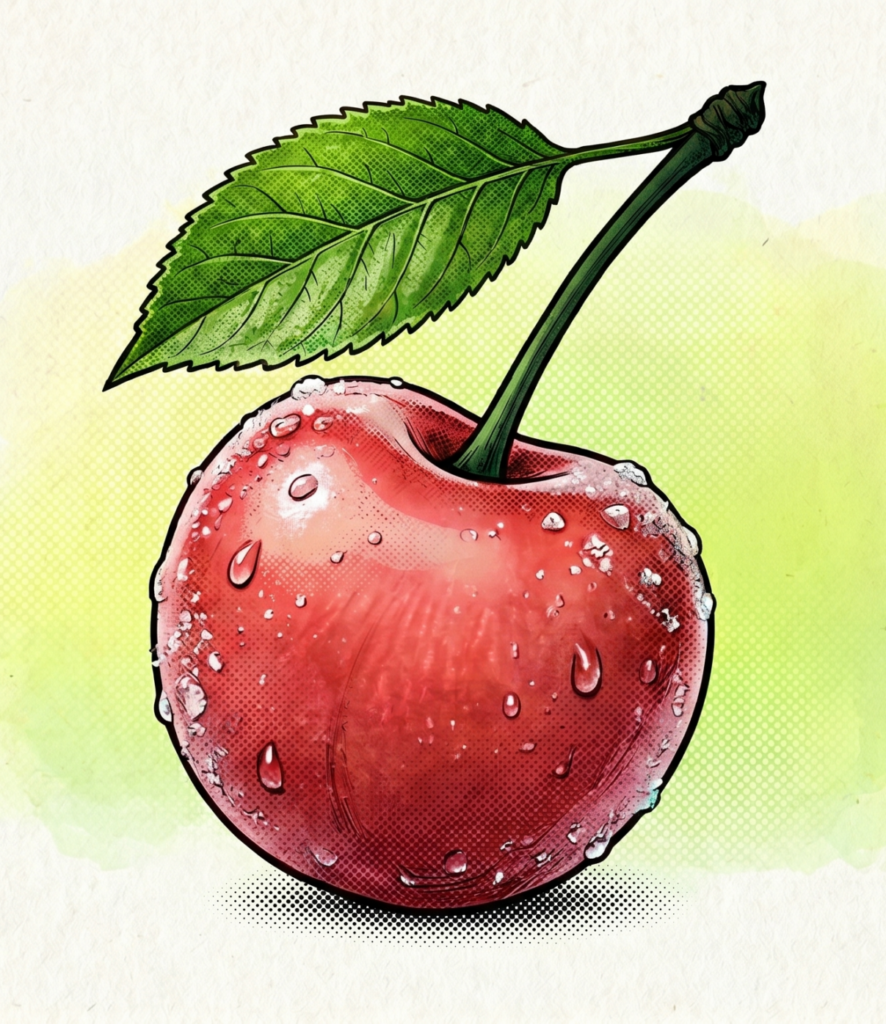
The wine-like, fermented dimension requires the damascenones pushed harder and balanced against a minimal sweetness platform. Beta-damascenone at elevated concentration creates the “slightly overripe” impression that differentiates a Morello from a sweet cherry.
The most technically demanding element is the sulfurous dimension. In real sour cherry, trace sulfur compounds contribute a faint, barely audible funkiness that prevents the fruit from reading as synthetic. Sulfurous materials are exceptionally potent odorants, detectable at minuscule concentrations, and must be dosed with a precision that approaches the pharmacological. Used correctly, a trace introduces the faintly animal, fermented edge that makes a Morello accord smell like it was grown in soil rather than synthesized in a laboratory. Used incorrectly, the composition smells of a struck match in a fruit market, which is no one’s goal.
III. The Cosmetic Crimson
This is cherry for the history of makeup: the powdery, ultra-matte, red-lipstick texture that belongs as much to the world of cosmetics as to the world of fruit. Its olfactory connection to actual cherry is taxonomic rather than literal: it smells like a lipstick case being opened in 1956, of rice powder and pigment and faint sweetness in a warm room.
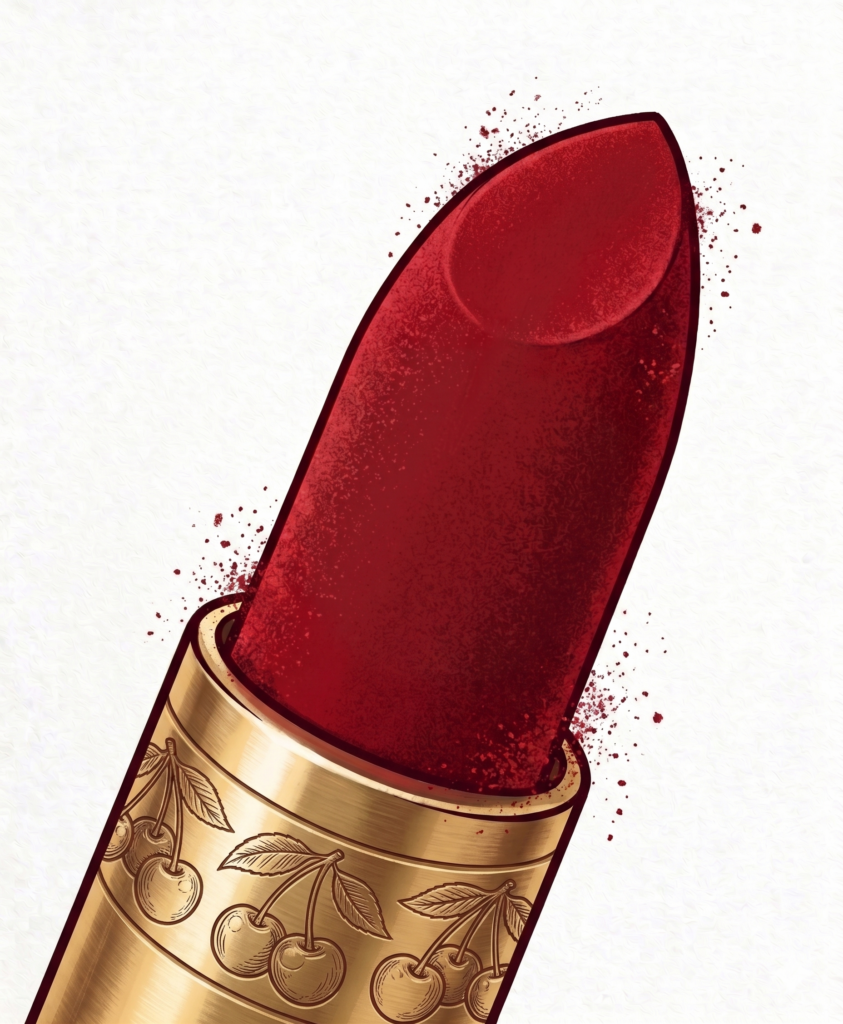
The Cosmetic Crimson facet is constructed primarily through the ionones and iris materials. Ionones are synthetic molecules that capture the scent of violet and iris at varying registers: powdery, woody, faintly fruity. Alpha-ionone adds a dry, velvety depth with a subtle red-fruit edge that connects it to the cherry family without smelling specifically of cherry. Beta-ionone, sweeter and more directly violet-like, brings the dusty-purple, matte quality associated with pressed powder and the inside of a vintage compact. The methyl ionone variants extend this powdery dimension toward orris (iris root), which is the olfactory DNA of luxury cosmetics.
The interaction between these materials and the cherry’s benzaldehyde-heliotropin skeleton is what produces the Cosmetic Crimson effect: benzaldehyde provides the fruit recognition, heliotropin provides the warm, creamy body, and the ionones overwrite the freshness with a powdery, matte, lipstick-adjacent texture that is entirely synthetic and entirely convincing. It evokes a specific colour rather than a literal fruit, marking a significant compositional achievement if you think about what that sentence actually means.
This facet has the broadest commercial appeal of the four, and consequently the most exhausted library of applications. The distance between interesting and generic here is a matter of proportion: ionone concentration calibrated too high produces generic powder; calibrated correctly, it produces the specific, slightly retro glamour of a red lip. This is precision work disguised as something accessible.
IV. The Phenolic Shadow
The darkest sub-facet, and the one most capable of transforming cherry from a fruity note into something with genuine structural complexity and narrative. The Phenolic Shadow operates through materials that introduce smoke, char, and medicinal tar, pulling cherry toward leather and tobacco and the kind of darkness that cannot be achieved through sweetness-management alone.
Tabanone is the subtler entry point. Its character spans smoky, fruity, and warm in a way that connects it naturally to damascenone’s fruit-tobacco register and to smokier materials further along the spectrum. At low concentrations it functions as a bridge between the fruit accord and a darker, resinous base; at higher concentrations it reads as tobacco-fruity with a distinctly animalic quality that is either compelling or confrontational, depending on everything around it.
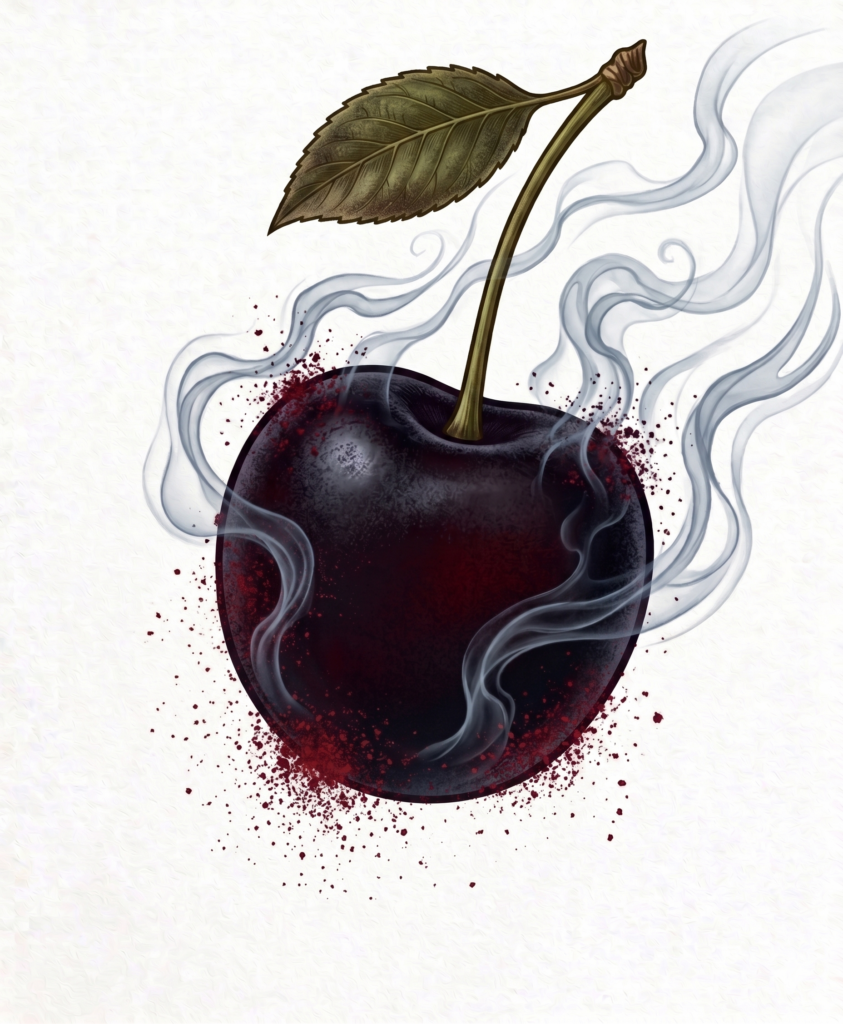
Guaiac wood, whose smoke is rounded, soft, and almost powdery rather than aggressive, provides a more approachable entry into shadow territory. Its dried-rose-petal-over-soft-smoke character connects the phenolic register back to the Cosmetic Crimson facet, allowing a perfumer to build a cherry that moves from powder through smoke without tearing the composition apart. It is, in this context, a civilising agent for materials that are inherently less polite.
Birch tar is the nuclear option. Produced by dry distillation of birch bark, it is a complex mixture of phenols and smoky compounds with a character that is simultaneously medicinal, tarry, and leather-like. Its regulatory status is under continued scrutiny due to carcinogenicity concerns, and its use in modern perfumery is heavily restricted. But the phenolic density it contributes to a dark cherry accord, when available, is irreplaceable: a smoked cherry that has been left too close to a fire, charred at the edges, the sweetness carbonised into something stranger and more beautiful than it started as.
The Phenolic Shadow is, ultimately, what happens when a perfumer stops being polite about cherry. It is the note’s refusal to be merely fruit, its insistence that darkness and transformation are available to it if the person at the organ is willing to go there. Whether that willingness is rewarded by the consumer or punished by the market is a separate question, and one the chemistry has no interest in answering.
The Regulatory Horizon
The molecular foundations of cherry perfumery are under pressure from multiple directions simultaneously. Benzaldehyde’s IFRA restrictions continue to tighten, with industry insiders warning of an effective ban arriving as early as next year, in 2027. Veteran perfumers have stated publicly that no functional replacement exists. If that happens, the Cyanidic Pit facet effectively disappears. Cherry without benzaldehyde’s hard edge will slide permanently toward confection.
Simultaneously, birch tar’s profile renders it increasingly indefensible under current and incoming IFRA amendments. The result is a note whose technical range is being compressed from both ends: the bitter, cyanidic rawness of benzaldehyde disappearing from the top, the phenolic darkness of birch tar disappearing from the bottom.
What remains, if the regulatory trajectory continues, is the commercial middle of cherry perfumery: the sweet, maraschino-adjacent, ionone-powered confection that has always been the note’s weakest and most ubiquitous iteration. The technical frontier (the Cyanidic Pit and the Phenolic Shadow) is precisely where the chemistry is most imperiled. The irony is characteristic of the industry’s relationship with interesting materials: regulators do not ban the banal. They ban the things worth defending.

Leave a Reply